
Still shouting...
High-quality cinema-going, raving in Morocco, the Murdochs, and a bamboozling Booker Prize winner

I had a little bit of FOMO watching this neat LA cinema crawl by Phil Lord and Chris Miller, the directors of the upcoming sci-fi event film, Project Hail Mary, starring Ryan Gosling. The duo enthusiastically showed the different formats their film has been crafted in and will be screened - from IMAX and 4DX (the motion and effect-laden cinemas) to ScreenX and Dolby Atmos.
That FOMO increased later in the week as I watched the stunning techno-driven Sirat in a non-Dolby Atmos cinema. How much better it would have been if the cinema was actually as progressive and capable as the film demanded.
Anyways, Lord and Miller got me thinking about the quality of Australian cinemas. Sure, overall box office revenue grew last year on the back of higher ticket pricing, or audience choice, for premium large format (PLF) cinemas, such as V-Max and Extreme Screen. But do we have the full gamut of available formats?
Yes and no. I was surprised to see there’s actually a ScreenX - that’s the 270 degree wide screen - down the road from me at Hoyts Entertainment Quarter. Might wanna start promoting that. And they will be screening Project Hail Mary in that format, which could be worth a look.
Event only has 4 ScreenX screens nationally though, which is understandable given the minimal product made for it. And of course, we have IMAX and 4DXs scattered around the country although the 4DXs are a niche experience.
Those bells and whistles cinemas are fine but I’m more into the actual presentation of your weekly films. What about the quality of the experience in Dolby Atmos or Dolby Vision? Hoyts and Event only have 9-10 Dolby Atmos venues nationally. And I don’t reckon any of them will show the arthouse film Sirat, mores the shame. Thankfully, one of them is Event’s George St cinema in Sydney, which is probably my fave cinema in Sydney. Its key auditoria are big and thump when it needs to. I remember seeing Dunkirk there and then at the Randwick Ritz and the difference in sound quality was immense (I was at the Ritz last night for The Moment and the speakers seem improved).
Unfortunately, Event has carved off a big chunk of its key city site for redevelopment, so 5 of its 16 screens will be out of action for some time. By my reckoning, those 5 will include the best VMax cinemas at the southern end of the venue, which will be replaced in the redevelopment.
I’ll check with Event but it appears the Sydney CBD will be without a high-end, top quality cinema for up to 2 years (Broadway is not the CBD). Good job, UNESCO City of Film, and yes, Melbourne, you were dudded. And don’t get me started on the quality of State Theatre as a cinema venue.
Anyway, with cinema as a medium at a bit of a reckoning point, the actual experience, as opposed to the content, becomes pointed. We are wanting and paying for a grander experience but will the cinemas keep up?
This week’s films
Sirat
It’s February but this will be in my year end’s best. What a thumping, manipulative, incredible experience. The less of the plot you know the better, other than it stars Sergi Lopez (who’s gone a bit Depardieu, let’s say) as a dad looking for his daughter at a desert rave in Morocco. She’s been missing for 5 months and was last seen at a rave. He and his son go on a Fury Road/Fitzcarraldo-type journey through the desert to a mythical rave where she may be. This mad, debilitating journey is framed spectacularly by Mauro Herce and accompanied by a visceral techno score by Kangding Ray. Don’t wait for a TV screening.
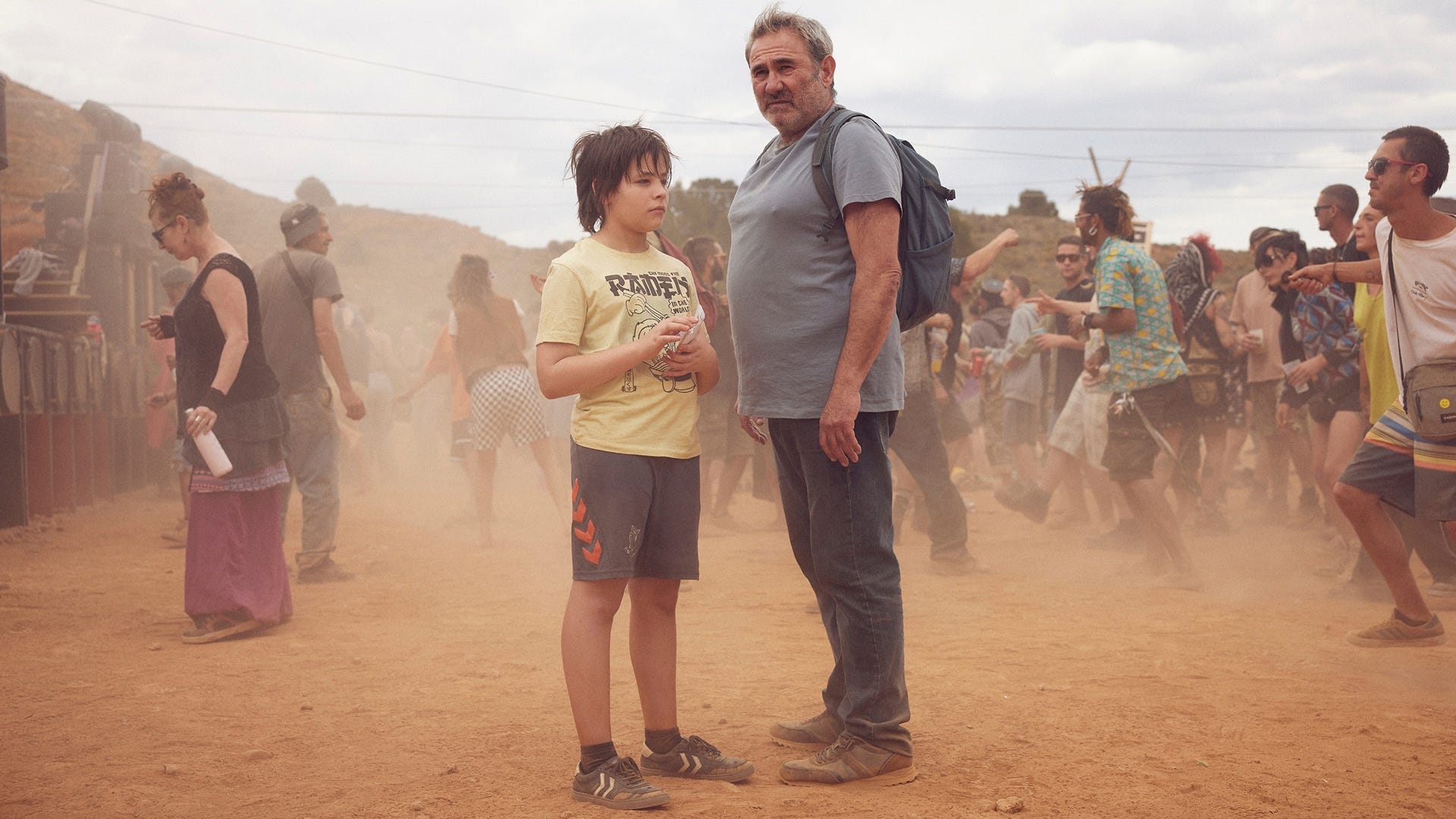
While we’re at it, the music branch of the Academy of Motion Picture Arts and Sciences needs a revamp if it can’t find room in the best score nominations for this (it’s nominated for Best International Film and Best Sound nevertheless). Others elsewhere have noted the music guilds don’t get electronic music; this is more proof.
Sirat is spectacular, traumatic, and seduces you to go to places that aren’t always happy. Its authenticity is enhanced by a cast drawn from raves, and they’re great. The Cannes Jury Prize winner is an engrossing cinema experience - I gasped twice. Director Oliver Laxe is particularly effective at making scenes you suspect you might know where they’re going, still surprise or resonate. A clever and thoughtful filmmaker. See it in the best cinema you can.
Scream 7 (unreviewed)
TBH, I clocked off at Scream 3 but the original was a breath of fresh air. Apparently this one ain’t, with the screenwriter of 1, 2, 4 and 7, Kevin Williamson, getting a chance to direct his second film finally (the first? Teaching Mrs Tingle). It features returning cast members Neve Campbell and Courteney Cox, and initial reviews are not good.
The Testament of Ann Lee (unreviewed)
The Brutalist’s co-screenwriter, Mona Fastvold, directs Amanda Seyfried as the titular founding leader of the Shakers religious sect in the 18th century. Many thought Seyfried might jag an Oscar nomination for her performance although the consensus is the film is too out there for that. Remains to be seen. Reviews are mixed for this unconventional film.
Solo Mio (unreviewed)
The Kinnane brothers, who direct this romantic comedy, did a stack of online comedy shorts with Kevin James during COVID. James, star of Paul Blart; Mall Cop and a few Adam Sandler movies plays a bald man out of love in Rome. Reviews are relatively ok for a Kevin James film.
and the best film currently in cinemas?
Sirat
It’s a good month for:
Alexander Skarsgard
Currently appearing in the likeable and recommended UK drama, Pillion, he also pops up next week in Charli XCX’s great mockumentary, The Moment. His Actors on Actors video for Variety with his dad, Stellan, is also well worth a look.
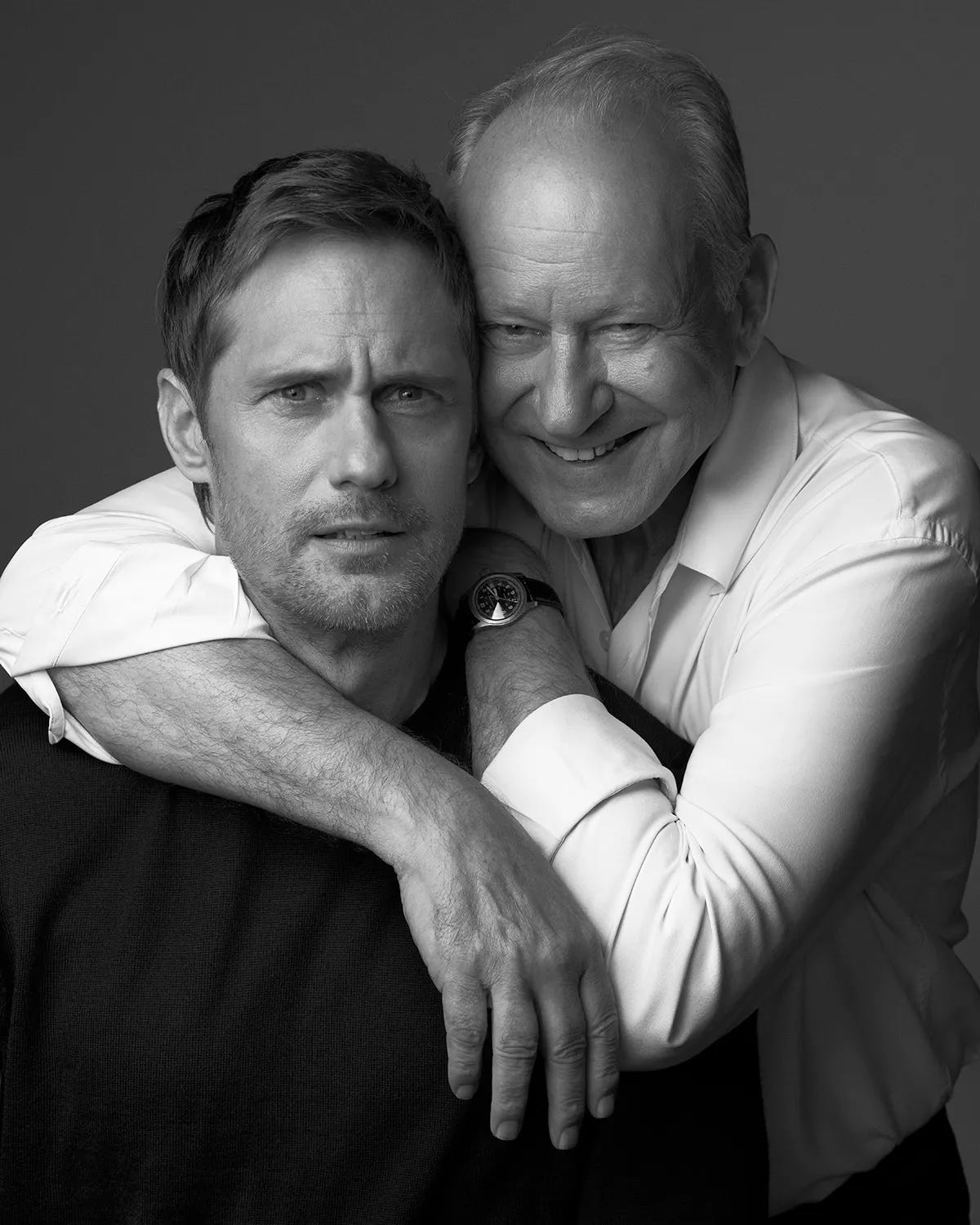
credit: Alexi Lubomirski for Variety
btw
Among the 44 documentaries Screen Australia this week announced it will fund are a few obvious ones, such as pieces about Sherbet, Rolf Harris, neo-Nazis and a ‘cinematic portrait’ of Tina Arena (to be aired on Seven, of course). I’m not sure how they’ll make 3x50 minute episodes on the Ugg boot but good luck with that, as Glenn Ridge would say.
The project that jumped out at me though is the untitled In Films’ 4-parter directed by Tony Jones and co-written by Jones, Cheyne Leigh Anderson and Paddy Manning. Its logline is “the story of a media company, as told by the men and women who were in the room.” Given Paddy’s written one book about Lachlan Murdoch and he’s doing a PhD on the history of the News Ltd, this untitled project can only be a history of News Corp.
Which will be intriguing up against the Netflix series, Dynasty: The Murdochs, which airs premieres on March 13 (the trailer dropped this week). Actually, the Liz Garbus US series does not look all that enticing in terms of revelations; more like a swag of observers doing their observing from the outside. I’m expecting the Australian version to be better.
Tour announces
Iron Maiden celebrate their 50th anniversary by coming here in November with Megadeath. Their doco, ‘Iron Maiden: Burning Ambition,’ is in cinemas in May.
Mental as Anything also celebrate their 50th anniversary with a national tour in June.
Tame Impala added new shows to his October tour
Jeff Goldblum & The Mildred Snitzer Orchestra are playing the Sydney Opera House only in May.
The Horrors return to tour in April after playing Dark MOFO.
One of my favourite comedians, Daniel Kitson, is back out here in April, with Melbourne dates already announced. Never disappoints.
...and a book
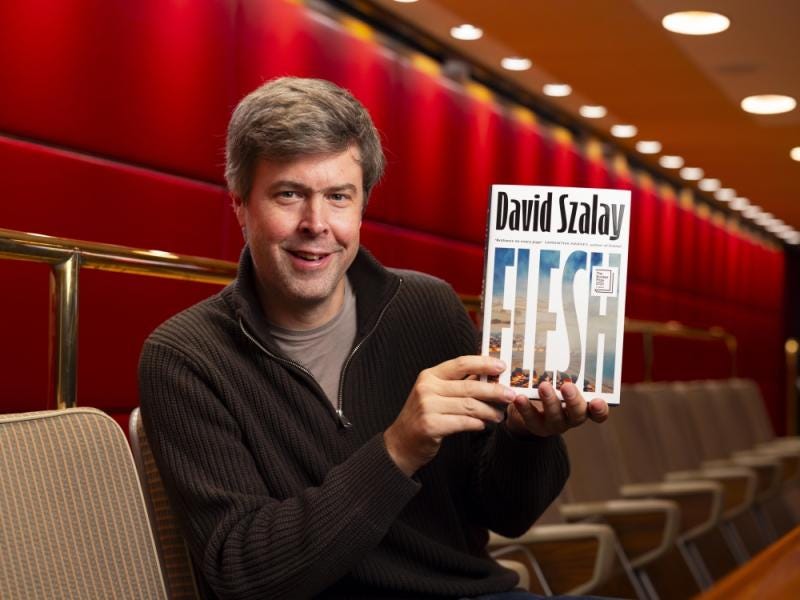
Of all recent Booker Prize winners, David Szalay’s Flesh has me flummoxed. How did this win?
The tale of a Hungarian falling through life, from rags to riches and back, is minimalist and flinty but left me cold. It’s certainly not grand or sweeping or particularly emotional. I’ll leave it to the Chair of the Booker Prize judging panel, Roddy Doyle to make the case for it because I can’t: “The book we kept coming back to, the one that stood out from the other great novels, was Flesh – because of its singularity. We had never read anything quite like it. It is, in many ways, a dark book but it is a joy to read.
‘At the end of the novel, we don’t know what the protagonist, István, looks like but this never feels like a lack; quite the opposite. Somehow, it’s the absence of words – or the absence of István’s words – that allow us to know István. Early in the book, we know that he cries because the person he’s with tells him not to; later in life, we know he’s balding because he envies another man’s hair; we know he grieves because, for several pages, there are no words at all.
‘I don’t think I’ve read a novel that uses the white space on the page so well. It’s as if the author, David Szalay, is inviting the reader to fill the space, to observe – almost to create – the character with him. The writing is spare and that is its great strength. Every word matters; the spaces between the words matter. The book is about living, and the strangeness of living and, as we read, as we turn the pages, we’re glad we’re alive and reading – experiencing – this extraordinary, singular novel.’